

Specialty Drying
Drying plans for hidden and trapped moisture
Specialty drying focuses on wet materials and spaces that need a tailored approach. Water may collect under a floor, inside a wall or above a finished ceiling. Restoration Plumber helps Toronto owners discuss moisture checks, drying access and equipment placement before repairs cover the affected area.
- Identify wet materials and cavities
- Review safe drying access
- Choose suitable equipment placement
- Track progress before repairs
First, the leak or other water source needs control. A drying plan also depends on contamination, the materials involved and safe access. Do not enter a wet space with possible electrical hazards. Review Ontario’s flood recovery advice if water has reached building systems.
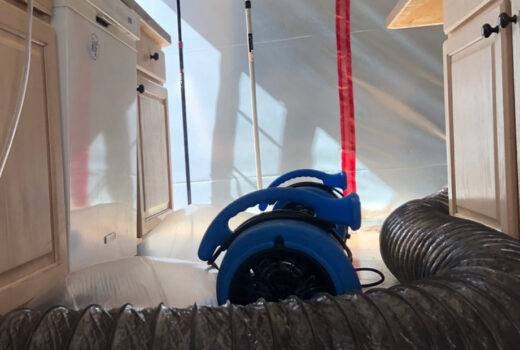
Specialty Drying planning
01
Assess
First, locate wet layers and safe drying access.
02
Plan
Next, choose structural drying methods for the materials.
03
Review
Finally, check moisture before planning repairs.
Match specialty drying to the material
Different materials hold and release moisture in different ways. For example, a layered floor needs different checks from an open wall cavity. Therefore, the plan should explain what can be dried in place and where controlled access or removal may be needed. However, equipment alone cannot solve every type of water damage.
Next, moisture readings and site conditions help track progress. Meanwhile, the drying time varies with the material, moisture load and room conditions. We do not give a fixed drying guarantee. For the wider cleanup scope, see water damage restoration. After larger water entry, review our flood restoration service.
Also ask how equipment use will affect occupied rooms, power access and work hours. Then keep the agreed drying area accessible for checks. Meanwhile, report any new leak or change in conditions. Finally, review the drying findings before replacing finishes or closing an opened cavity.
Call 416-989-5859 about specialty drying in Toronto. Tell us which materials are wet, how long they have been affected and whether the source has stopped.
Specialty Drying FAQs
Can moisture remain beneath a dry surface?
Yes. For example, flooring layers and wall cavities can stay wet after the exposed surface feels dry.
Does specialty drying always avoid removal?
No. Damage, contamination or limited access can make controlled removal necessary.
How is drying progress checked?
Moisture readings and site observations help assess the materials over time.
Can you promise a fixed drying time?
No. The time depends on the materials, moisture load and changing site conditions.
When should new finishes be installed?
First, review the drying findings and repair plan, so wet materials are not covered too soon.
