

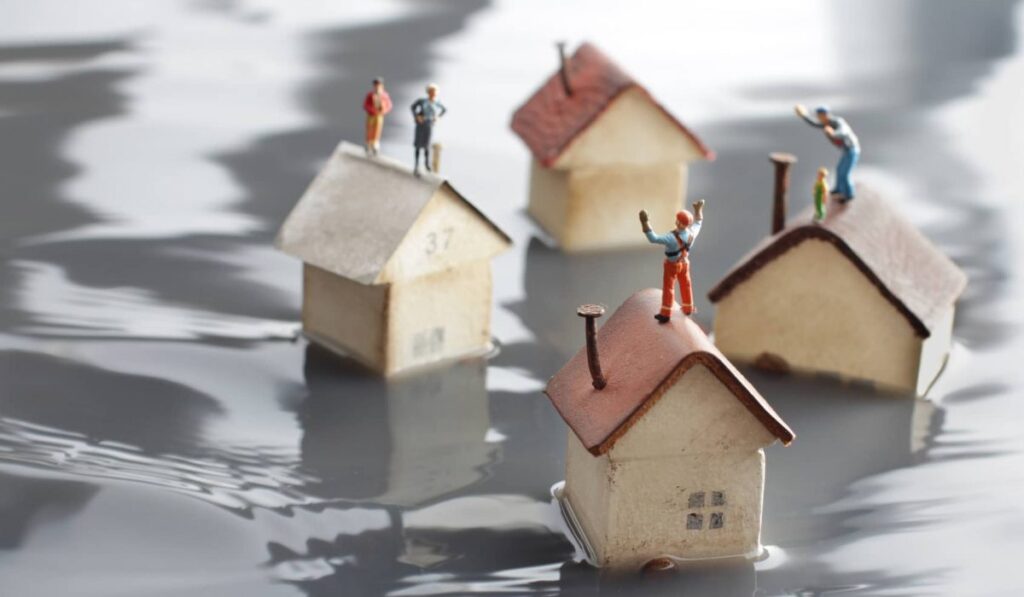
Drying water damage starts with the leak source and safe access. A fan cannot solve an active leak or show whether a wall cavity is dry. First, tell the site team where water appeared and which materials are wet. Then agree on extraction, moisture checks and the drying plan.
Stop adding water to the room
Arrange repair of the source where it is safe to do so. Meanwhile, keep people away from electrical hazards and contaminated water. Read Ontario’s flood safety guidance before entering a wet area. Do not use ordinary household electrical equipment in standing water.
Provide access for water damage drying
Share entry rules, lift bookings and the location of affected rooms. In a condo, also tell the building manager about shared walls or ceilings. Clear access and early information can reduce avoidable delays. However, do not move damaged materials if doing so could spread contamination or expose a hazard.
Let moisture readings guide drying
A dry-looking surface may still have wet material behind it. Therefore, drying water damage needs checks suited to the building and materials. Ask which areas will be measured and how progress will be recorded. Avoid switching equipment off or changing its position without discussing the plan.
Do not seal moisture inside
Painting or replacing flooring too soon can hide damp materials. Instead, confirm the drying findings before closing the work area. Our specialty drying service covers spaces that need a tailored approach. Call 416-989-5859 to discuss your property; drying time depends on the conditions.
Water damage drying questions
Will more fans always dry a room faster?
No. Air movement, moisture removal and material conditions need to work together.
Can a floor feel dry while water remains below?
Yes. Surface appearance alone does not confirm the condition of hidden layers.
Should I move drying equipment?
Ask the site team first so changes do not interrupt the agreed drying plan.
When can I repaint?
Confirm the source is resolved and the affected materials are ready for repair.
Is there one drying time for every leak?
No. The water source, materials and building conditions affect the time needed.
Share this... Spread the word!


